Legal Globalization
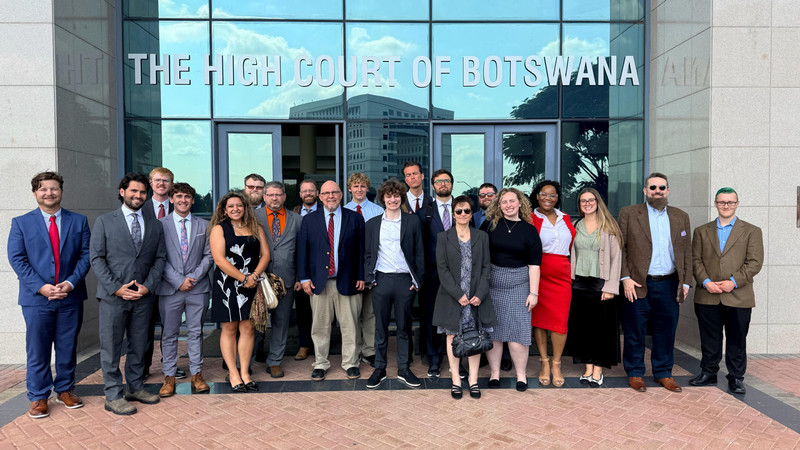
Botswana and South Africa
In this course, students will learn the fascinating histories of South Africa and Botswana and their important roles in the modern global political and economic system, meet their dynamic people, and experience their unforgettable natural beauty and wildlife. Most of the news that the average American hears from Africa is terribly imbalanced, overlooking its great success stories and emerging bright future. The continent is home to an increasing number of democratic and economic success stories, a huge rising middle class, rapidly increasing amounts of foreign investment, and stands poised to become an economic powerhouse.
The classroom portion of the course provides a survey of the history, culture, and legal systems of South Africa and Botswana. Students are required to write a research paper about an approved topic of interest pertaining to the course. During the travel portion of the course, the class interacts with the court system and legal officials in Gaborone, Botswana, visiting all levels of their court system from a traditional village customary law court to their apex court, the Court of Appeal. In South Africa, the class visits historic and cultural sites in Johannesburg, Cape Town, and Kruger National Park.
Based on a long-standing collaboration between professors at SIU Simmons Law School and the University of Akron School of Law, the course brings together students from both law schools for a world-class travel study experience. Past courses have been offered during fall semester, with travel in late December and early January; or during the summer intersession, with travel in mid-May to early June.
Japan
This course asks a simple question: Compared to what? In this two-credit seminar, we study the Japanese legal system alongside our own. We explore Japan's civil-law tradition, compared to our common law tradition, and Japan's government structure, compared to our own. We examine its judiciary, legal professions, and dispute resolution mechanisms, and then focus our comparative lens on subjects such as constitutional, criminal, and family law. We explore topics like why Japan has 1/10 as many licensed attorneys, per capita, as the U.S.; why Japan's prosecutors have a 99% conviction rate; and why Japan utilizes a family registry. Students write and reflect on the how these differences impact the role of law in society in the United States and Japan. After the coursework, the class travels to Japan, where we visit Tokyo, Kyoto, Osaka, and Hiroshima. We tour Japan's courts, a prison, a law school, the Diet, and other historic legal sites. Along the way, we meet with Japanese attorneys, judges, government officials, and law students. You will come home knowing more about Japan and see the United States more clearly.
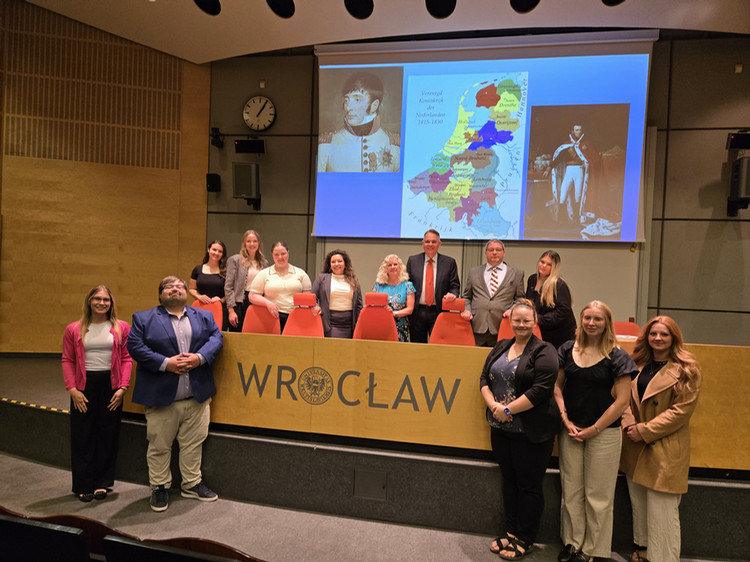
Poland
Students in this course will learn about many aspects of Poland including its rich history, government, laws and legal system, legal educational system, and culture, and will compare that learning to their knowledge of comparable U.S. laws and institutions. Class readings and discussion focus on Poland's history with its neighboring countries, especially Germany and the former U.S.S.R./Russia, its legal system, its response to the war in Ukraine, U.S.-Poland relations,
and Poland's membership in regional institutions such as the European Union, the European Human Rights system, and NATO. Students will attend lectures and participate in discussions about Poland and will reflect on how this learning compares to the United States.
The class meets daily for an intensive one-to-two-week period at the SIU Simmons Law School, then students travel to Poland for approximately two weeks during the summer intersession in May and June. While in Poland, students visit Warsaw, Wroclaw, and Toruń, exploring the history and beauty of these cities through walking tours, court visits, museum visits, and other cultural activities. Students attend lectures with Polish law faculty, government officials, and other professionals. Upon their return from Poland, students work independently on a writing and research project related to what they learned.